There are times when I find myself asking a simple but fundamental question:
Why did God choose singing as one of the primary ways His people worship Him?
As a musician, this question matters to me—not out of curiosity alone, but because it shapes how I understand the tool I work with every day. Worship could have been structured very differently. We could have been asked to respond to God through visual art, physical movement, or silent contemplation alone. These expressions certainly have their place. Yet across Scripture, when God’s people gather to praise Him, singing consistently takes center stage.
That consistency invites examination.
Creation was not silent
The opening verses of Scripture describe creation as an act of speech:
“And God said, Let there be light.” (Genesis 1:3)
Speech is not abstract. It is physical. Sound is vibration—energy moving through space. When God speaks, His word does not merely convey meaning; it acts. Matter responds. Light exists.
This observation alone suggests that creation was not a silent event. But Scripture does not leave us to inference.
In Job 38:4–7, God Himself provides commentary on the creation narrative. As He questions Job about the foundations of the earth, He reveals something remarkable:
“When the morning stars sang together, and all the sons of God shouted for joy.”
Creation was accompanied by song.
This passage establishes a crucial theological point: music is present at the very beginning of God’s creative work. Sound, song, and praise are not later human additions to worship. They are woven into the fabric of God’s interaction with His creation.
A Singing God
The presence of music in creation is not an isolated detail. Scripture repeatedly presents God not only as One who speaks, but as One who sings.
In Zephaniah 3:17, God is described as rejoicing over His people with singing. This image is striking. The Creator who commands galaxies into existence also expresses joy through song. Praise is not merely demanded by God—it is modeled by Him.
Once this pattern becomes visible, music appears consistently at pivotal moments in redemptive history:
- Deliverance at the Red Sea is marked by song (Exodus 15).
- Israel’s prayer life is shaped through sung psalms.
- Music brings relief and restoration to troubled hearts (1 Samuel 16).
- Song becomes a vehicle for memory and instruction (Deuteronomy 31).
- Praise precedes victory in battle (2 Chronicles 20).
- Singing bears witness in suffering (Acts 16).
- The church is instructed to teach and admonish one another through song (Ephesians 5; Colossians 3).
In every case, music is not decorative. It is functional. It carries meaning, forms belief, and gives voice to response.
Heavenly worship as the pattern
The Bible does not present earthly worship as a creative experiment. It presents it as a reflection.
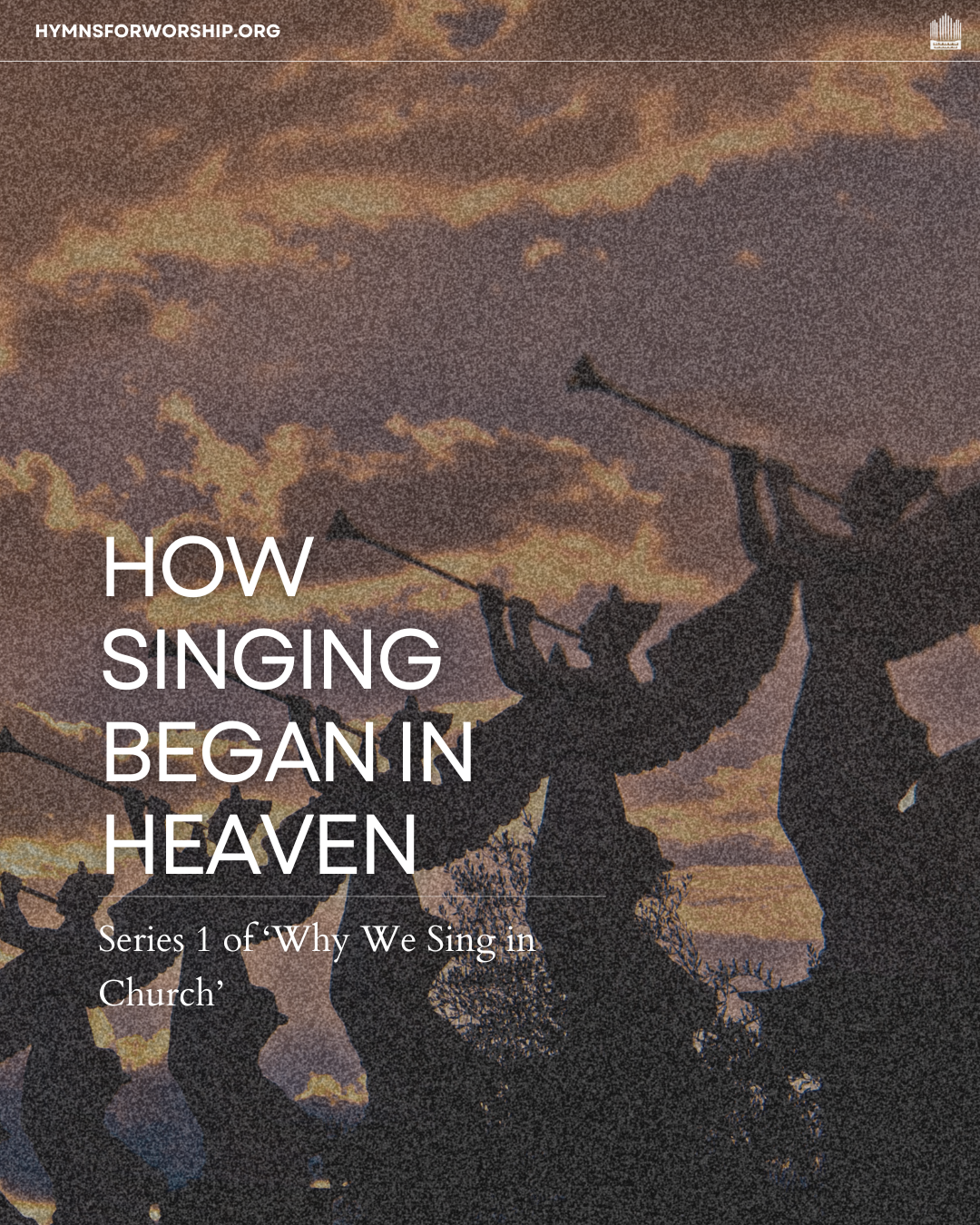
Heavenly worship provides the pattern toward which earthly worship gestures. Angels are repeatedly depicted as praising God—not silently, but audibly, corporately, and expressively. Scripture records scenes where praise is sung, voices are raised, and worship is shared.
Ellen White’s descriptions reinforce this biblical picture. She repeatedly refers to angelic praise as sung praise—melodious, intentional, and directed toward Christ. Singing, in this sense, is not merely an emotional outlet. It is an act of recognition—an ascribing of worth.
If singing is one of the means by which heavenly beings praise God, then congregational singing on earth is not a cultural preference. It is participation in a larger reality.
Why this matters
This first reason for singing in church is foundational: singing did not originate with us.
It did not arise because humans needed a creative outlet. It did not develop simply because music is emotionally effective. Singing is present in worship because it is already present in God’s own activity and in the worship of heaven.
When the church sings, it does not invent praise—it joins it.
Understanding this frames every later discussion about congregational singing. Silence in worship is not neutral. Participation in song is not optional. To sing is to align earthly worship with its heavenly source.
Coming next in this series
Why We Sing in Church (2): The Bible Commands Corporate Singing
If singing began in heaven, how explicitly does Scripture require it of God’s people on earth? The next article will examine the biblical mandate for congregational song—and why singing together is central, not incidental, to worship.
Explore more hymns: