When we say “worship,” most of us picture the front of the church.
The platform. The instruments. The people who look confident holding a mic.
But the longer I’ve studied hymns—and the longer I’ve watched churches sing—the more I’m convinced the most important voice in the room is the one we tend to overlook:
the congregation’s.
And before I go any further, here’s my own confession.
I’m a musician… and I still don’t really like my voice.
I can play. I can teach. I can lead from the piano. But singing out loud—especially if I feel like people can hear me—still makes me a little self-conscious. So if you’ve ever thought, “Singing is for the confident people,” I get it.
But I also think we’ve misunderstood what congregational singing is for.
It’s not a performance. It’s not a reward for people who are “good at music.” Rather, it’s one of the simplest ways God invites the whole church to participate—together.
And that’s what I’ve been focusing on this month: not just hymns as content, but the act of singing itself. Why God keeps weaving it into worship. Why it matters. Why it’s worth doing even when we feel awkward, tired, or unsure.
Because singing does something that plain speaking doesn’t.
Singing makes truth easier to carry.
Singing helps the Word stay with us longer than the sermon notes do.
Singing gives our emotions somewhere to go—joy, repentance, grief, hope.
And somehow, it turns a room full of individuals into one people.
I’ve also been thinking about how often God asks His people to sing—not just as background music, but as part of how we remember, how we testify, how we encourage each other, how we pray.
Even heaven isn’t silent.
And sometimes I wonder if part of the reason we feel spiritually thin is because we’ve slowly turned singing into something we “listen to” instead of something we do.
A quick side note: one reason I love hymn history is because it quietly reminds us of this. For example, the tune source for “O When Shall I See Jesus” traces back to The Sacred Harp, a shape-note hymnal designed for regular church members. The notes were printed in different shapes to help “untrained” singers learn the music and join in.
I love that. Not because it’s a fun fact—but because the message behind it is so simple:
This was always meant to be sung by the whole church.
So here’s what I’m hoping for—especially as we head into another Sabbath. Not louder singing for the sake of volume.
Just real singing. Congregational singing.
The kind that says, “Lord, I’m here,” even if your voice is quiet.
The kind that joins in even if you don’t love how you sound.
The kind that lifts truth up when you don’t have the words on your own.
Because when the church sings, we’re not just filling time.
We’re practicing faith out loud.
And sometimes that’s exactly what our hearts need.
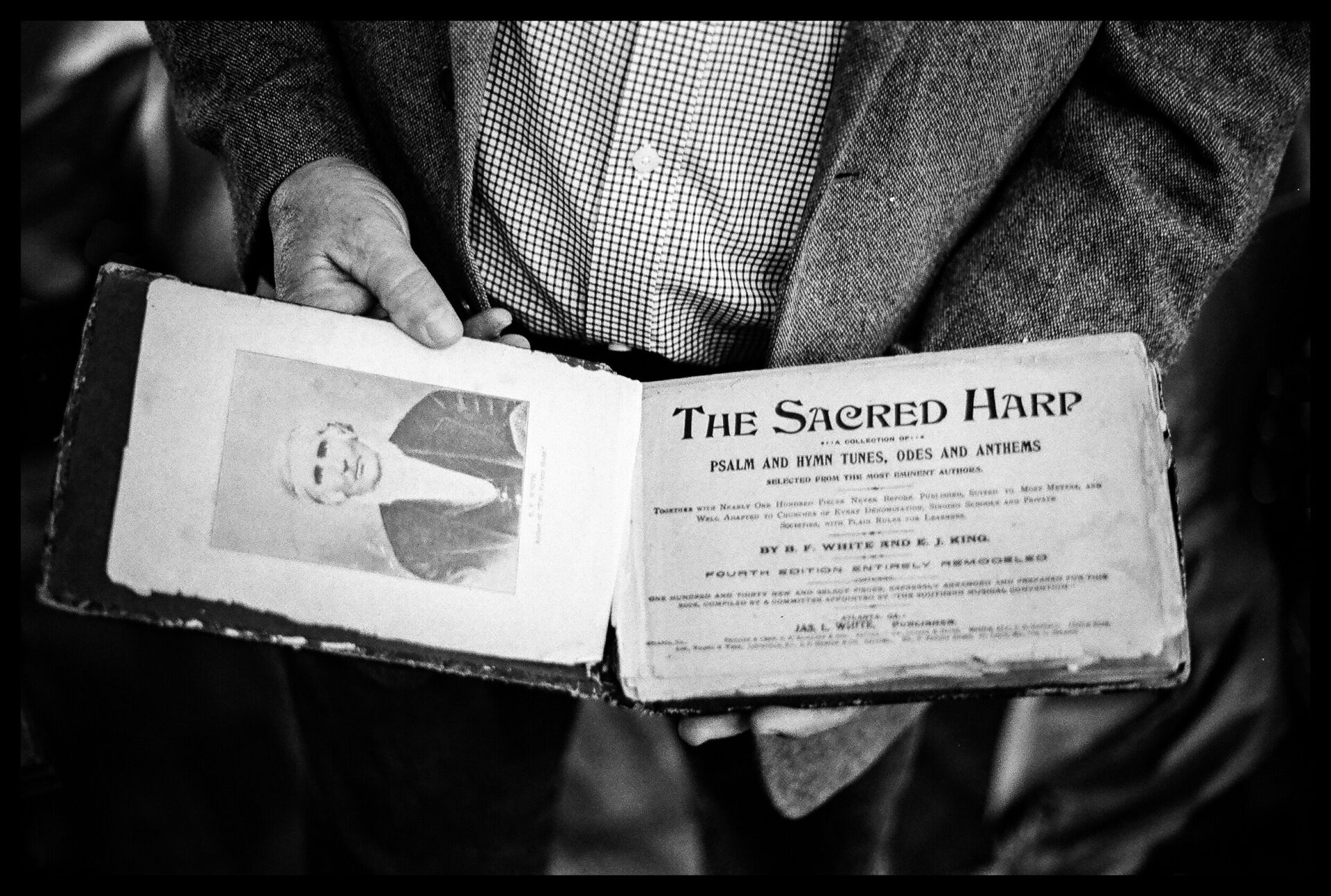
A quick side note: one reason I love hymn history is because it quietly reminds us of this. For example, the tune source for “O When Shall I See Jesus” traces back to The Sacred Harp, a shape-note hymnal designed for regular church members. The notes were printed in different shapes to help “untrained” singers learn the music and join in.
I love that. Not because it’s a fun fact—but because the message behind it is so simple:
This was always meant to be sung by the whole church.
So here’s what I’m hoping for—especially as we head into another Sabbath. Not louder singing for the sake of volume.
Just real singing. Congregational singing.
The kind that says, “Lord, I’m here,” even if your voice is quiet.
The kind that joins in even if you don’t love how you sound.
The kind that lifts truth up when you don’t have the words on your own.
Because when the church sings, we’re not just filling time.
We’re practicing faith out loud.
And sometimes that’s exactly what our hearts need.