When my mom died, I was left with the quiet work of going through her house—drawer by drawer, box by box, the physical evidence of a life lived for other people. I don’t know what I expected to keep. But I know what I grabbed quickly.
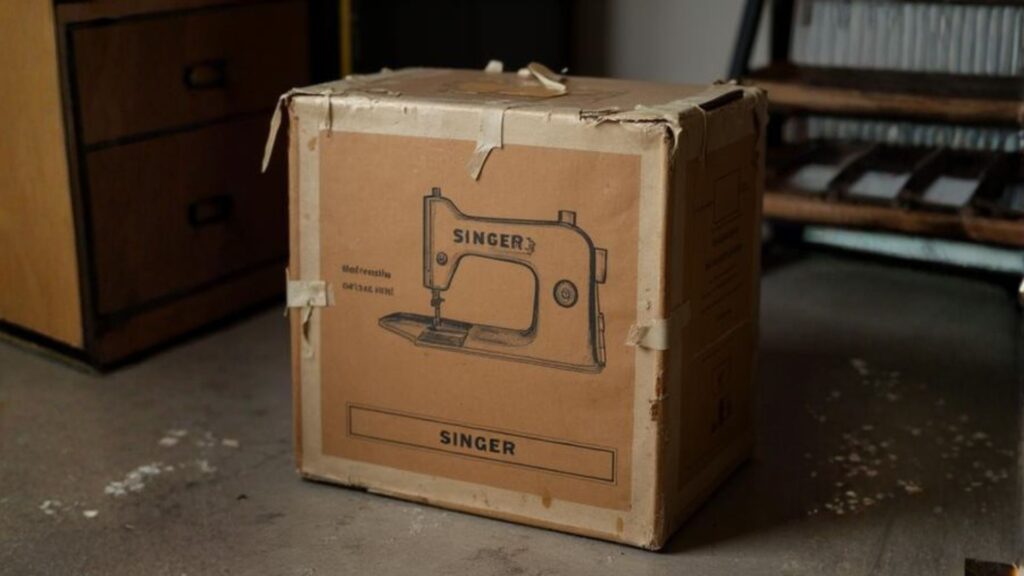
Her electric sewing machine.
It’s still in its box. Unopened. In storage. And yet I can’t part with it.
To most people, it’s just a tool. To me, it’s a symbol—of my mother’s careful love, the kind you don’t post online and don’t announce to anyone. The kind that shows up in the way a curtain hangs straight, the way a hem is finished properly, the way a child walks into school covered and cared for.
My first grade uniform was sewn by her. At the time, I didn’t appreciate it. Most of my classmates had mall-bought, ready-to-wear uniforms, and mine looked a little different. Not bad—just different. I noticed. Children always do.
But now, that difference feels like a gift.
My mom sewed so much when I was a kid—our uniforms, my brother’s uniforms, curtains for the house. Before the electric machine, she had the big one—the kind you run with your feet. I remember wanting to learn, but the threading intimidated me. I loved the finished product, but I didn’t have the passion to push through the details. Later she upgraded to a more mobile electric version, and I even tried sewing classes for a while… but it didn’t pan out. Life filled up. Time got crowded. The interest never bloomed into a craft.
And still—when she died, I kept the machine.
Because it holds the memory of a mother who made a home with her hands.
Lately I’ve been thinking about why that object has stayed with me. Why it matters that it’s still boxed. Why I can’t let it go even though I’m not using it.
And then it hit me: that sewing machine is the way I hold a legacy. It’s how I keep love close—even love expressed through repetitive, ordinary work.
That’s also what hymns are.
A hymn is not just a song. It’s a piece of faith that someone stitched together—line by line, Scripture by Scripture, prayer by prayer—so the church could be covered with truth.
Hymns are often the handmade uniforms of worship. Sometimes they don’t look like what’s “trending.” Sometimes they feel a little different from what everyone else is wearing. But they last. They carry a story. And they fit deeper than we realize.
Most of the worship that forms us isn’t loud. It’s quiet repetition. It’s a chorus we sing until it becomes comfort. It’s a stanza we learned as a child that rises up again in grief. It’s a familiar melody that steadies the heart when we don’t know what to pray.
Just like sewing, hymn ministry is full of unseen labor. Someone chooses the song. Someone finds the key. Someone practices the introduction. Someone teaches the congregation patiently—again and again—until the hymn becomes theirs. Much of it happens behind the scenes, but it shapes the whole room.
And maybe that’s why my mom’s sewing machine speaks to me so loudly now: because hymns are also a kind of careful love. Not flashy. Not always “mall-bought.” But faithful.
There’s one more detail I can’t ignore: the machine is still in its box.
Which means I’ve preserved it… but I haven’t used it.
And if I’m honest, we can do that with hymns too.
We keep them in memory. We keep them in tradition. We keep them in a hymnal on the shelf. We keep them as “the songs my parents sang.” And sometimes we preserve them so well they never get touched—never opened, never practiced, never returned to daily life.
So here’s my small invitation for this week: open the box.
Not literally, unless you want to. But spiritually—open one hymn you’ve “kept” but haven’t used lately. Choose a hymn that has history in your family. Or choose one you don’t know yet. Read the words slowly like you’re tracing a pattern. Notice where Scripture is stitched into the lines. Sing one stanza at home—especially as the Sabbath approaches—and let that hymn do what it was made to do: cover you with truth.
At Hymns for Worship, that’s what we’re trying to help you do—not simply collect hymns, but use them. Learn them. Understand them. Bring them into your home. Pass them on. Because the church doesn’t just inherit songs—we inherit a way of believing.
My mother stitched fabric. The church stitched faith into melody.
And some legacies aren’t meant to stay boxed forever.
Explore more hymns: